

I. Introduction
With the explosive growth of artificial intelligence and the computing economy, AI data centers (AIDCs) are placing ever-higher demands on power supply systems. The conventional 400 V low-voltage AC distribution architecture has reached its physical limits in the face of high-density GPU server clusters, and the 800 V high-voltage DC (HVDC) power supply architecture based on solid-state transformers (SST) is becoming the industry consensus. With its higher voltage class and lower line losses, the 800 V DC system provides power support for megawatt-class high-density cabinets.
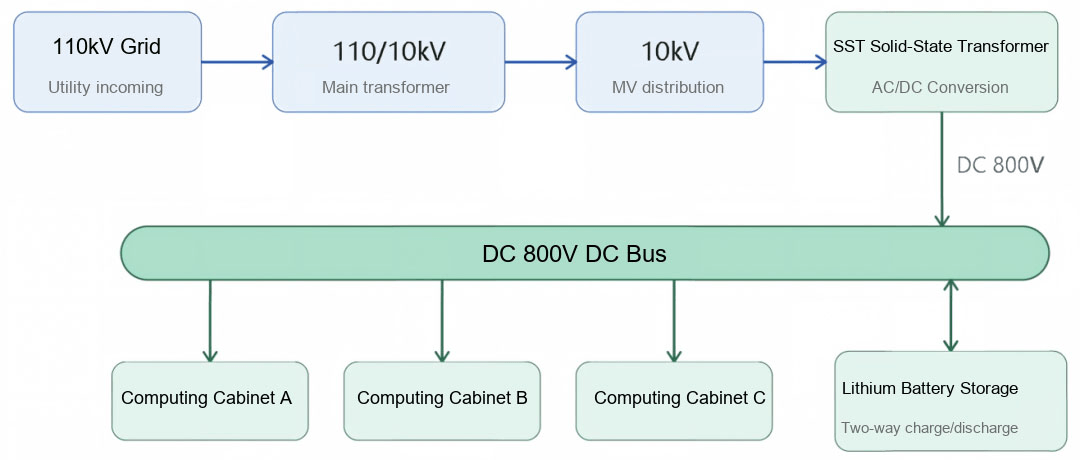
Figure 1 Schematic diagram of the AIDC power distribution structure
However, while improving energy efficiency, HVDC systems also bring new safety challenges. The 800 V DC bus operates in an unearthed (IT) mode, with neither the positive nor the negative pole directly earthed. In such a system, a single earth fault is extremely difficult to detect—the system may keep running in a faulty state without being noticed. Once a second earth fault occurs, a short-circuit loop is formed instantly, which can cause equipment fire, shutdown, or even the outage of the entire computing cluster. The team standard T/CMEEEA 261-2026 Technical Requirements for HVDC Systems in Data Centers explicitly requires 800 V DC systems to be equipped with online insulation monitoring devices.
The Acrel AIM-T500L DC insulation monitoring device is designed specifically for such scenarios. It is suitable for DC 0~800 V and AC 0~690 V or lower voltage systems. Together with the ASG200 test signal generator and the AIL200-12 insulation fault locator, it can also locate fault circuits and is compatible with DC systems of 800 V and below. This article describes its core value in DC 800 V and lower-voltage systems of computing centers from three dimensions: technical principle, system application, and electrical design.
II. Special Requirements of DC 800V Systems in Computing Centers
2.1 Characteristics of the 800 V DC Power Supply Architecture
The 800 V DC power supply system of a computing center usually uses a solid-state transformer (SST) to convert 10 kV medium-voltage AC into 800 V DC, which is then distributed to GPU server cabinets through DC distribution cabinets. The system adopts a three-wire (POS/RTN/PE) bus architecture, with neither pole earthed.
2.2 Insulation Safety Risk Analysis
In an 800 V HVDC system, insulation safety faces multiple challenges:
First, the high-frequency electromagnetic environment accelerates insulation aging. The SST uses SiC power devices and high-frequency PWM modulation technology. The high-frequency, high-voltage, and high dv/dt operating conditions impose continuous stress on insulating materials and accelerate insulation aging.
Second, DC earth faults are highly concealed. When a single earth fault occurs, the system can still operate normally, making it hard for conventional protection devices to detect, and manual inspection is even less likely to find it.
Third, HVDC faults have severe consequences. Once a double earth fault occurs, the short-circuit current may instantly destroy power modules and cause the outage of the computing cluster, potentially leading to major losses.
2.3 Requirements of Standards and Specifications
The T/CMEEEA 261-2026 standard clearly stipulates: 800 V DC systems shall be equipped with insulation monitoring devices, and an alarm shall be issued when the insulation resistance of the positive or negative bus to earth falls below the set threshold. The system shall also be equipped with DC arc fault protection, with rapid diagnosis within 10 ms in case of insulation abnormalities.
III. Technical Overview of the Acrel AIM-T500L DC Insulation Monitoring Device
3.1 Product Positioning and Selection
The Acrel AIM-T500L series insulation monitoring devices form a complete voltage coverage matrix: suitable for DC 0~1000 V or AC 0~690 V systems, matching unearthed AC and DC systems of DC 800 V and AC 690 V and below.
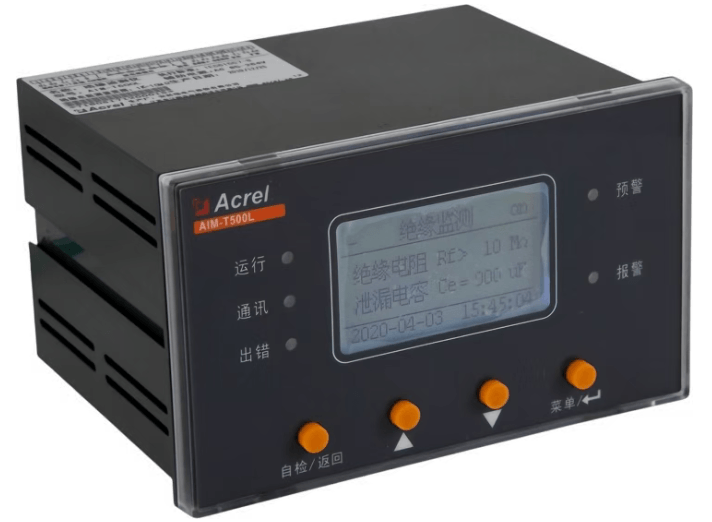
Figure 3 AIM-T500L DC insulation monitoring device
3.2 Key Technical Parameters
Table 1 Key technical parameters of the AIM-T500L
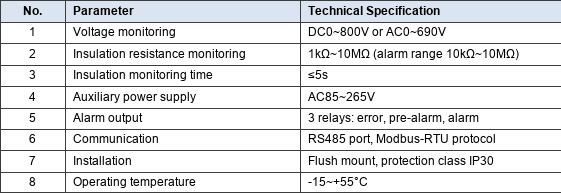
3.3 Signal Injection Detection Principle
The AIM-T500L insulation monitoring device adopts the signal injection detection principle. By injecting a monitoring signal between the DC system and earth, it measures in real time the insulation resistance between the unearthed DC system and the earth conductor. When the measured insulation resistance falls below the set value, an insulation fault alarm signal is issued.
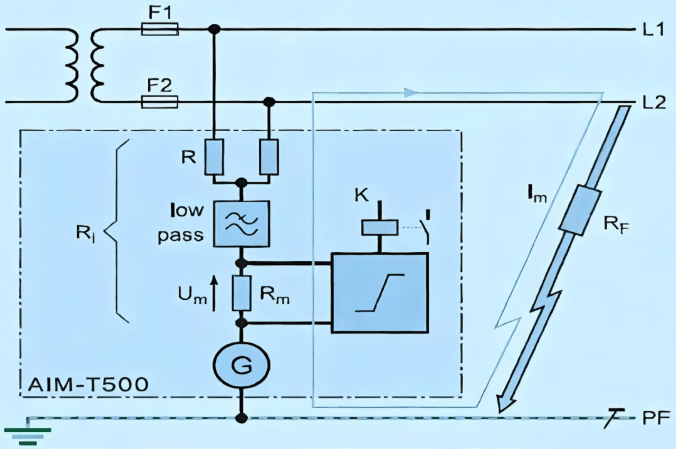
Figure 3 Principle of measuring DC insulation resistance to earth by the signal injection method
The AIM-T500L insulation monitoring device can monitor the insulation resistance of both AC and DC systems to earth, whether the bus is energized or de-energized. Combined with insulation fault location products, it can also locate faulty branch circuits. Insulation monitoring range: 1 kΩ~10 MΩ; alarm setting range: 10 kΩ~10 MΩ.
IV. Application of the AIM-T500L in DC 800V Systems of Computing Centers
4.1 System Architecture
In the DC 800 V distribution system of a computing center, the AIM-T500L insulation monitoring device is usually installed in the SST power cabinet or the 800 V DC output cabinet.
The device acquires in real time the positive-pole-to-earth and negative-pole-to-earth voltages of the 800 V DC bus as well as the calculated insulation resistance values of both poles to earth. When the insulation resistance falls below the preset pre-warning or alarm threshold, the device immediately issues an alarm. Meanwhile, all monitoring data are uploaded via the communication interface to the SST master controller and the background monitoring platform, enabling remote early warning and data traceability.
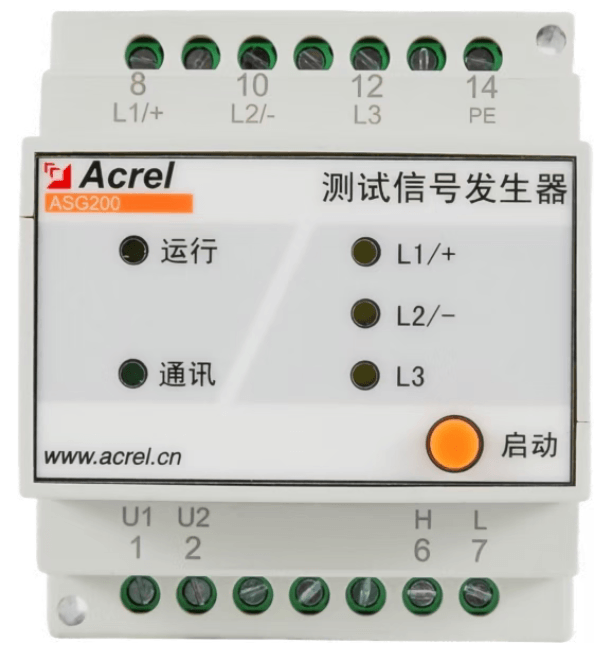
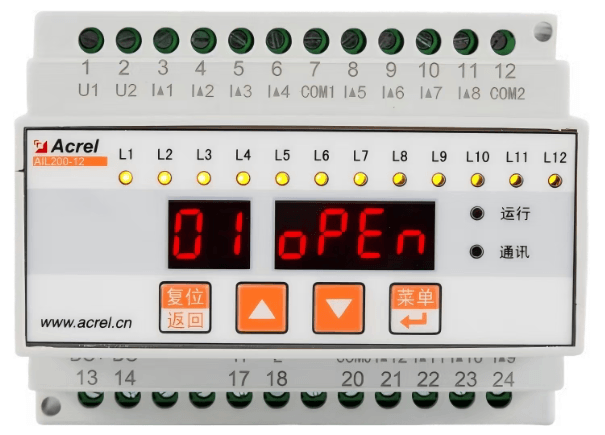
The ASG200 test signal generator injects a test signal into the DC system, and the AIL200-12 insulation fault locator together with the AKH-0.66L-xx(PB) high-sensitivity insulation signal detectors monitors the test signal, thereby achieving rapid location of the insulation fault circuit.
 ‘’
‘’
Figure 4 ASG200 test signal generator and AIL200-12 insulation fault locator
4.2 Electrical Principle Description
The AIM-T500L insulation monitoring device is connected to the positive pole (U+) and negative pole (U−) of the 800 V DC bus and to the local earthing bar (PE), forming a complete insulation-resistance-to-earth measuring circuit. After the device is put into operation, the AIM-T500L continuously monitors the insulation status of the DC bus, calculating in real time the positive-pole-to-earth resistance (R+) and the negative-pole-to-earth resistance (R−). When the insulation resistance of either pole to earth falls below the preset pre-warning threshold (e.g., 100 kΩ), the device issues a pre-warning signal, reminding O&M personnel to watch the insulation trend; when the resistance continues to drop to the alarm threshold (e.g., 30 kΩ), the device immediately issues an alarm signal and triggers relay operation.
At the same time, the ASG200 test signal generator continuously injects a 20 V/5 Hz test signal into the system. When the AIL200-12 insulation fault locator and the AKH-0.66L-xx(PB) signal detectors detect the fault signal on the corresponding feeder circuit, they issue a location signal to identify the faulty circuit.
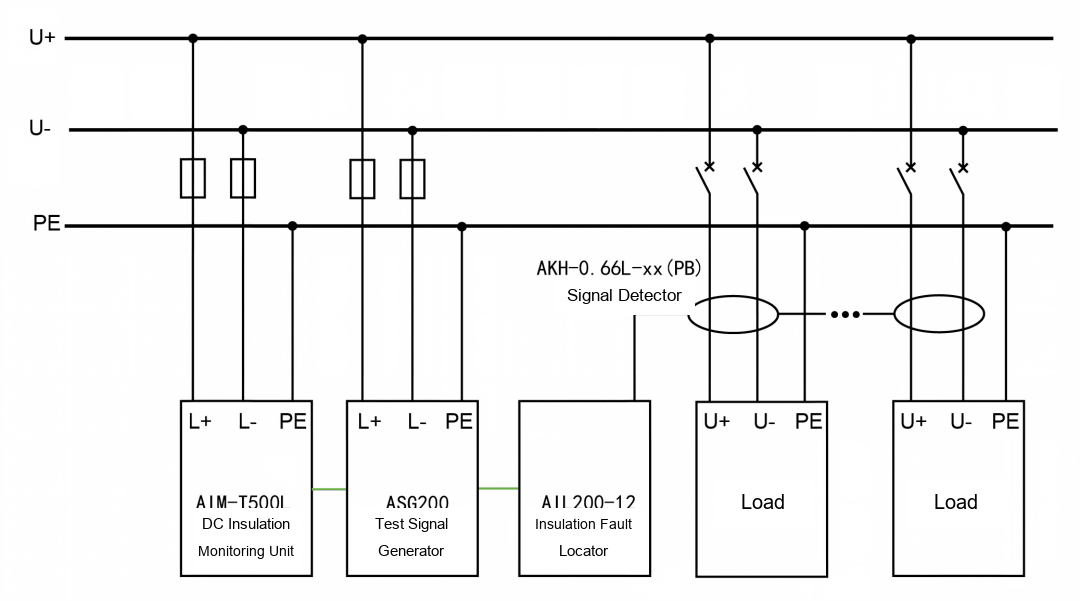
Figure 5 Electrical wiring diagram of the AIM-T500L insulation monitoring device
4.3 Engineering Application Value
This insulation monitoring solution has already been deployed in multiple data center projects of internet companies and telecom operators in China. In practical engineering, the solution has delivered the following core values:
Online monitoring under all operating conditions: insulation monitoring is available whether the bus is energized or de-energized, covering the entire equipment life cycle.
Clear fault identification: it can distinguish the earth-fault circuit and fault type, providing clear direction for rapid troubleshooting.
Intelligent early-warning linkage: monitoring data are uploaded to the monitoring platform in real time, supporting multi-level alarms and remote O&M.
Compact integrated design: DIN-rail mounting and pluggable terminals allow direct integration into the SST cabinet.
V. Conclusion
As AIDCs evolve toward higher density and greater power, the 800 V HVDC power supply architecture will become the standard configuration of the new generation of computing infrastructure. In this technological transformation, DC insulation monitoring has been upgraded from an "optional configuration" to a "mandatory requirement."
With the signal injection method at its core, a wide monitoring range of 1 kΩ~10 MΩ, and fast response, the Acrel AIM-T500L insulation monitoring device builds a reliable insulation safety line of defense for DC 800 V systems in computing centers. From technical principle to engineering practice, the solution has proven its practicality and reliability in unearthed AC and DC systems, providing a solid guarantee for the safe and stable operation of computing infrastructure.